

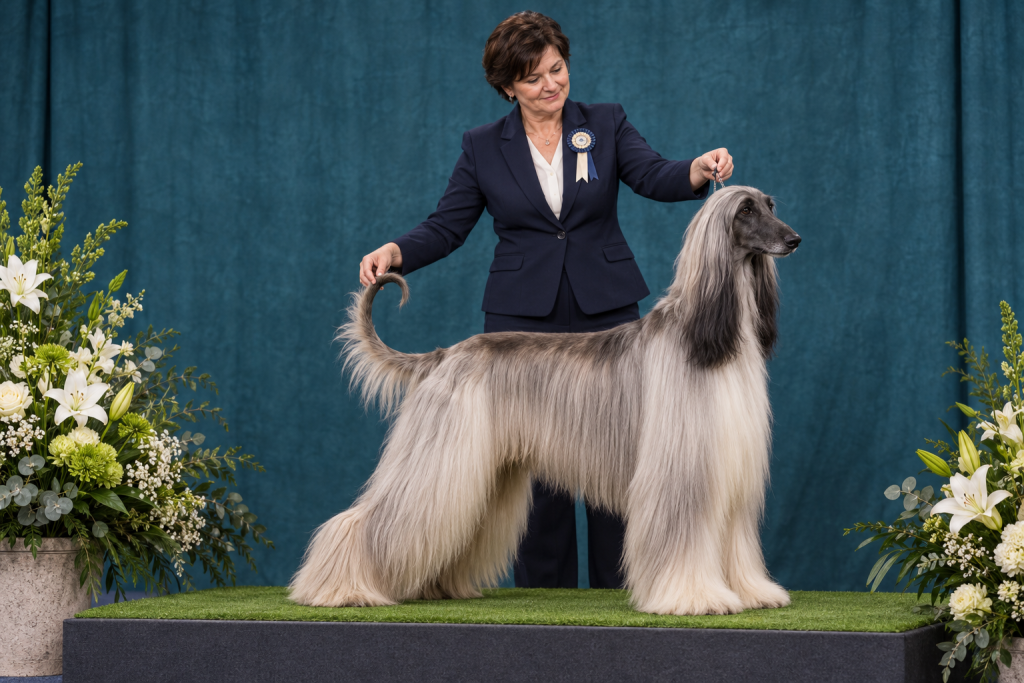
 A friend of mine showed her dogs last weekend. I asked why she keeps doing it, given the hours, the travel, the grooming, and the gossip.
She’s a show breeder, and she’s sick of how bitchy the ring is. The whispering, the sniping, and the “she doesn’t really improve the breed” comments from people who’ve never looked at her health results.
So I asked, “Why not just quit?”
She said: “I just want to beat their arses and make them eat shit!”
I laughed. Then I realised she’d said out loud what a lot of people in the ring won’t admit.
It’s not about the breed. It’s about ego.
Not for everyone. But for more people than will ever say so.
“Improving the breed” is the line everyone uses. It sounds noble. It also happens to justify the travel, the entry fees, the expensive handlers, and the sneering at anyone who doesn’t play the game. But look at what the ring actually rewards.
Turning up. Again and again, ideally with a skilled handler, a brilliant groomer, and a cheer squad. A win can come down to the judge’s preference that day, the quality of the trim, and who’s on the end of the lead. The dog’s genetics barely get a look in.
Now look at what it doesn’t reward:
- Low COI
- Health testing and longevity
- Sound temperament
- A pedigree that widens the gene pool instead of strangling it
No judge has ever asked for the COI. But a tightly line-bred pedigree that “sets type” and wins? That gets applauded, even while it stacks the genetic deck against the dogs. When ribbons are the scoreboard, people start breeding for the scoreboard.
Here’s the part that really gets me.
I know of a breeder who spent thousands importing a dog. Fresh bloodlines, new genetics, exactly what a small gene pool needs. He didn’t win for her, so she had him castrated.
Rare genetic diversity, flown across the world, and erased from the breed because he didn’t make her look good.
She could have made him available to other breeders. Instead, one judge’s opinion on one day decided the dog’s entire future. That’s not stewardship. That’s a bruised ego with a vet appointment.
And it’s not a one-off. Show breeders will tell you the ring “proves” their dogs are worth breeding from. Fine. But then who’s allowed to use them? Often nobody. Studs are guarded like state secrets and approved for a tiny circle of friends.
If your dog is so good that he deserves to be bred from, why is he such a secret?
You can’t improve a breed by hoarding its best genetics. That’s not breeding. That’s a trophy cabinet.
So what does improving a breed actually look like?
I’d argue it looks a lot less glamorous than a Best in Show photo:
- Lowering COI, litter after litter. Not “managing” it. Reducing it. A breed is a population, not a family tree, and narrowing the gene pool for the sake of a look is borrowing against the future health of every dog in it.
- Health testing that’s published, not whispered. Results anyone can check, including the ones that aren’t flattering. If it only gets shared when it’s good news, it’s marketing.
- Longevity and quality of life. How do your dogs do at 8, 10, 12? What do your puppy owners tell you at year five, not week eight?
- Temperament you’d actually want to live with. Stable, confident, trainable, with the breed’s character intact. A dog that wins in the ring and falls apart in a lounge room hasn’t been improved.
- Keeping what makes the breed the breed. Improvement isn’t abandoning type. It’s holding on to it without paying for it in health and behaviour.
- Sharing good genetics. Letting responsible breeders use your best dogs, so the benefit spreads across the breed instead of sitting in one kennel.
- Tracking outcomes, and changing course when they say so. The honest breeder asks “what is my program producing?” and adjusts, even when the answer is uncomfortable.
Notice what’s missing from that list? A ribbon.
You can do all seven with a show career, or without one. Plenty of ethical breeders are quietly doing this work and never set foot in a ring. Plenty of show breeders are doing it too, and I salute them. Open data, honest pedigrees, generous stud access, no sniping. You know who you are.
To everyone else, here’s a question worth asking yourself on the drive home from the next show:
Am I doing this for the breed, or for me?
Because a rosette is not a health certificate, and a gene pool is not your private property.
Show breeders and non-show breeders: what should we actually be rewarding? Let’s hear it.
Click to learn more


0 responses on "“I want to make them eat shit”: what a show breeder taught me about “improving the breed”"